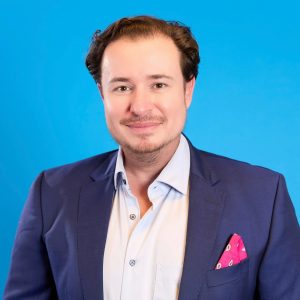
Wars, inflation, the AI boom, rising property prices: in difficult economic and political times, hardly any topic is as relevant as investing. But what really works in the long term? Dr. Gerd Kommer is one of the best-known ETF experts in the German-speaking world and has been working on science-based wealth building for decades. In an interview with VIVA Monaco, the Munich economist explains why global equity ETFs are the most sensible solution for many investors, which mistakes beginners should avoid and why composure on the stock market is often the most valuable quality of all.
Gerd Kommer in conversation: investing confidently with ETFs
You have been working on finance and ETFs for decades. What fascinates you personally about them?
Dr. Gerd Kommer: I am fascinated by the capital markets and by investing in general, because ultimately it is about how we can improve our lives from a financial point of view and how our society can and will develop economically in everyone’s interest. The often-claimed separation between the economic sphere of our existence and the rest is ultimately an illusion in this context. Almost our entire existence has, directly or indirectly, to do with money and finance. ETFs and their somewhat „older brother“, namely classic, non-listed index funds, are the single most important innovation in investing in the last 50 years, especially for ordinary private households. They are the most successful innovation in any case, because no other financial product has expanded its popularity and market share worldwide as much in recent decades. And anyone who takes a closer look at ETFs will quickly see that they really are a brilliant invention. There is no other financial product that combines so many advantages with so few disadvantages while also being astonishingly easy to use. The secret of ETFs‘ success is the combination of simplicity, robustness, low costs and high returns.
Munich is one of the most expensive cities in Europe. People who live here spend a lot on rent, restaurants or holidays. How important is it, especially in uncertain times, to let your money work for you instead of just earning and spending it?
My company is based in Munich and I live there too. Yes, the cost of living in Munich is the highest in Germany. However, there are some European metropolises where it is considerably higher still, e.g. Zurich, London, Oslo, Copenhagen, Amsterdam and others. But ultimately, life is expensive everywhere these days if you want to afford yourself and your family a reasonably acceptable standard of living. And for that reason – as you rightly suggest – it is all the more important to let your hard-earned savings work for you efficiently. Anyone who keeps their savings more or less entirely in an interest-bearing bank account and an old life insurance policy is certainly not letting that money work efficiently for them. The returns on these forms of investment are simply too low after inflation, taxes and costs. No compound interest effect can work there either. With a globally investing equity ETF, this works much better and just as easily. Incidentally, such an ETF investment is also more profitable than an owner-occupied home, whose profitability 90% of the population in this country greatly overestimate. A tenant and ETF investor who is just as financially disciplined as a homeowner household will probably have greater final wealth after 20 or 30 years than the homeowner household.

Many people shy away from investing in the capital markets because they think they need a degree in finance or a lot of starting capital. What do you say: how much knowledge do you really need, and how much money can you sensibly start with?
Anyone who doesn’t want to end up under a bridge at 60, or be completely financially dependent on their spouse for the rest of their life, needs a minimum of financial knowledge. Fortunately, acquiring it is not difficult, and you don’t need to be a math whiz or have an „innate interest in money matters“. With ETFs, you can start investing from as little as five euros a month in the form of an ETF savings plan.
More than 70 percent of a typical world ETF is invested in US stocks. Should private investors get nervous about that, or is sitting it out the better option?
Anyone who finds a 70 percent US share in an MSCI World ETF too much can easily reduce this US weighting to a „healthier“ level of 40 to 50 percent by adding a second, non-US ETF or by using the L&G Gerd Kommer ETF (WKN WELT0A).
Instant-access and fixed-term savings accounts are paying interest again, and suddenly „leaving money in the account“ feels sensible again. When does that actually make sense, and when does this security cost you real money in the long term?
An interest-bearing instant-access account is suitable for covering a personal liquidity reserve, which every household should have and which should amount to around six times average monthly living costs. It is not suitable as an instrument for long-term wealth building and retirement provision. With an interest-bearing instant-access account, after taxes you usually earn just about as much as inflation – in other words, nothing in „real“ (inflation-adjusted) terms – and that is the case today too. Instant-access accounts currently yield around 1.7 percent a year. Depending on circumstances, a good quarter of that goes on taxes. From the rest, you have to deduct the current inflation rate of around 2.6 percent. Result: you lose money. Even if you engage in strenuous, time-consuming rate-hopping between accounts, this return disaster doesn’t fundamentally change. Real wealth building – letting your money work for you and using the compound interest effect – ultimately doesn’t work with savings accounts. It works best with a global equity ETF.
"With interest-bearing bank deposits, your money isn't working for you – it's more or less lazing about while you work yourself to the bone."
How much of your wealth should you put into stocks at all? Does that change as you get older or retirement draws closer?
For long-term wealth building – especially for young investors – there is a lot to be said for a high equity allocation. Stocks are the asset class with the highest expected return, but also with the greatest fluctuations. Those who can bear these fluctuations and have a long time horizon have historically been rewarded for it. With increasing age and approaching retirement, the situation changes. Then capital preservation and the predictability of withdrawals become more important. Accordingly, for most people it will make sense to gradually reduce the share of stocks in the portfolio and increase the share of lower-risk investments from the point at which they still have ten years until the end of their working life. There are many calculators online with which you can easily work out your personally appropriate equity allocation (simply search for a „risk capacity calculator“). According to a simple rule of thumb, your personal equity allocation is „110 minus your age“. Important: by stocks I mean globally diversified equity ETFs here, not individual stocks, which would be much riskier.
Artificial intelligence is changing everything right now. Will it also revolutionize investing, and could an AI one day replace the classic financial adviser?
AI will undoubtedly change investing and is already doing so. But one should distinguish here between operational improvements and a genuine „revolution“. On the operational level, AI can do many things better: automate processes, cut costs, implement portfolios more efficiently. In this sense, it will further rationalize the financial industry. Investing itself, in the sense of what a good portfolio and a good investment strategy are, will not be changed significantly by AI, and perhaps not at all. I warn against investing large shares of your wealth in individual AI-related companies now, because these companies are very highly valued today, i.e. very expensive, and represent risky, concentrated bets going forward.
Financial freedom – being able to live off your wealth at some point – is a dream for many. Is that realistic for an ordinary employee in Munich, or are influencers selling us an illusion?
„Financial freedom“ is neither a trick nor an illusion, but the result of a) time, b) a sufficient savings rate as a percentage of net income and in absolute terms – in other words, discipline and forgoing consumption – and c) sensible investing. I have already indicated above what sensible investing is and what it isn’t. Those most likely to achieve financial freedom, and soonest, are those who make sure they have a good income that rises steadily over time, a sufficiently high savings rate and invest smartly, for example in global equity ETFs on a buy-and-hold basis.
Imagine your portfolio loses 30% of its value within a few weeks. What do you do, and what should you definitely not do?
If it consists of one or more globally diversified equity ETFs, my advice is: do nothing. Sit it out. If financially possible, buy more after a 20 percent market correction. Over the last 125 years, the global stock market has always recovered, despite many interim downturns and crises. Stocks are the most profitable asset class, and that will remain the case in the long-term future.
"ETFs are the single most important innovation in investing in the last 50 years."

What are the three biggest mistakes you can make when getting started with ETFs, and are there situations in which ETFs are simply the wrong choice?
Mistake no. 1: waiting on the „sidelines“ in the mistaken belief that „now“ is not yet the right time to start.
Mistake no. 2: too much activity out of ignorance or greed and FOMO. Instead of simply investing and staying invested, people constantly optimize, reshuffle or react to trends. This „back and forth“ produces high costs and unnecessary tax burdens and is well documented empirically as a long-term performance killer.
Mistake no. 3: a low savings rate. You should set aside at least ten percent of your monthly net income for retirement, for example in the form of an equity ETF savings plan; those who manage 15 or 20 percent are even better off. Money that you will quite likely need in the next five years for consumption or other investments (e.g. buying a property) should not be invested in stocks.
Many Munich residents keep gold in their safes; younger people have Bitcoin in their apps. Are these real assets for times of crisis for you, or rather expensive hobbies?
In my view, gold and Bitcoin are only suitable as additions to a portfolio. In the long run, gold has a lower return than the asset class of stocks, but it can still make sense in a portfolio for diversification reasons. With Bitcoin, nobody knows what the long-term average return will be, because Bitcoin is still too young for that and there are simply too many uncertainties. But Bitcoin, too, could possibly be a good diversifier of the rest of one’s wealth – with a considerable uncertainty factor. Gold and Bitcoin together should make up a maximum of 10% of a household’s total wealth. At all times. But you can just as well do without these two investments entirely.
Building wealth is one thing, but at some point you also want to use it. How do you make withdrawals wisely in retirement without having to fear outliving your money?
In practice – surprisingly – the opposite problem often exists. People who have saved up a small fortune over 30 or more years and are now retired tend to spend too little out of fear. This misguided stinginess, which comes at the expense of their standard of living and happiness, is often also motivated by feeling they „must“ leave their children as much as possible, or by the „obsession“ with avoiding drawing down their capital.
What question does no one ask you that actually everyone should?
I think the question of the right mindset for gradually building financial strength and independence is asked too rarely and too rarely answered seriously for oneself. Two basic principles should be firmly anchored in this mindset and, of course, actually lived: 1) I and nobody else am mainly responsible for how my finances will develop over the next 50 years. I neither outsource nor delegate this responsibility to my partner or to the state. 2) „Even if you have the investment skills of Warren Buffett, if you don’t save, you’ll die poor.“ This simple, fundamental and often overlooked insight comes from the admired US financial expert and author William Bernstein.

Dr. Gerd Kommer lives in Munich and is one of the best-known ETF experts in the German-speaking world
(„Der leichte Einstieg in die Welt der ETFs“, 176 pages, around €18, in German). The economist, who holds a doctorate, has been working on science-based investing since the 1990s and is considered
one of the pioneers of passive investing
in Germany. www.gerd-kommer.de
Interview: Mike Badstübner. Photos: PR, AI-generated (1)